I needed to do something bigger. I had been chillin hard for the past few days doing short hikes into and around the town of Turrialba. Here at the Spanish by the River Hostel there is whole binder of things to do. Most of them require some travel and paying a guide, something I didn’t want to do. So I got on google earth and started scoping things out. It turns out there is a famous waterfall about 11 km from where I’m staying. So I hiked to it.
The hike was mostly along roadways from Turrialba to the town of Aquiares. I packed a rain coat and two liters of water and headed down the road. Most of the way I was hugging the non-existence shoulder of the road and trying not to get hit. I didn’t get hit. The roads are narrow and winding through the mountains in the area and surrounded by jungle with coffee fields here and there. Coming around the corner after a big hill I came to this tree which was dedicated to be preserved back in 2005.

I’m pretty sure this species is the Guanacaste named thus for the shade it provides.
A little ways after the tree I made it to the town of Aquiares and was struck by the vista. Its even rainforest certified.

Then I made my way into town and made the turn I thought I needed to make. I met some Abuelas and was able to ask which way the waterfall was. The nice lady gestured and spoke some Spanish that I couldn’t quite understand. I was on the right path. So I climbed up over the hill and heard the roar of a water fall or catarata en espanol. I knew I was in the right spot but it took a minute to find the trail. I took some wrong turns but found the trail down. It was a steep winding path with big boulder to boulder moves and some slick mud. It ended here:


So I did some jumping across the river and exploring about and saw a real horizon line about 50 meters away. So I crept up to the edge and snapped the first selfie of the trip.
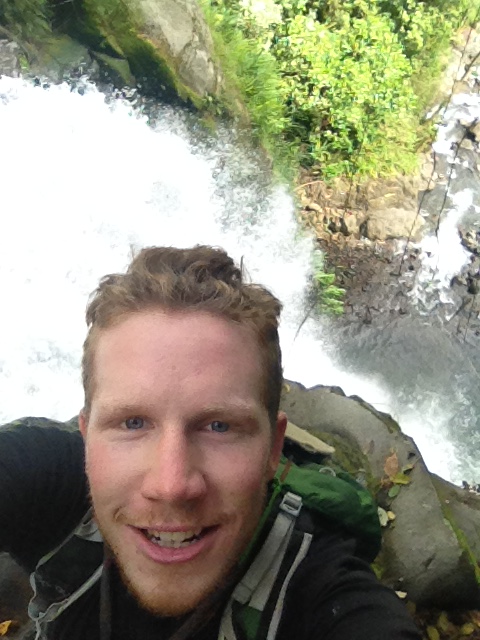

After this pic I went for a quick swim and then found the trail to the bottom and snapped a couple more selfies down there.
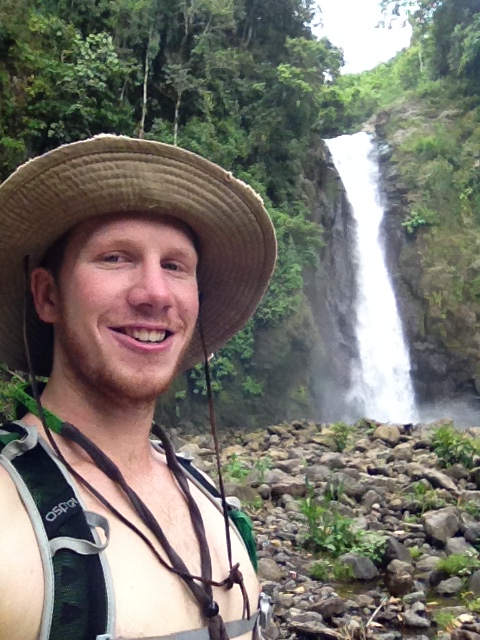
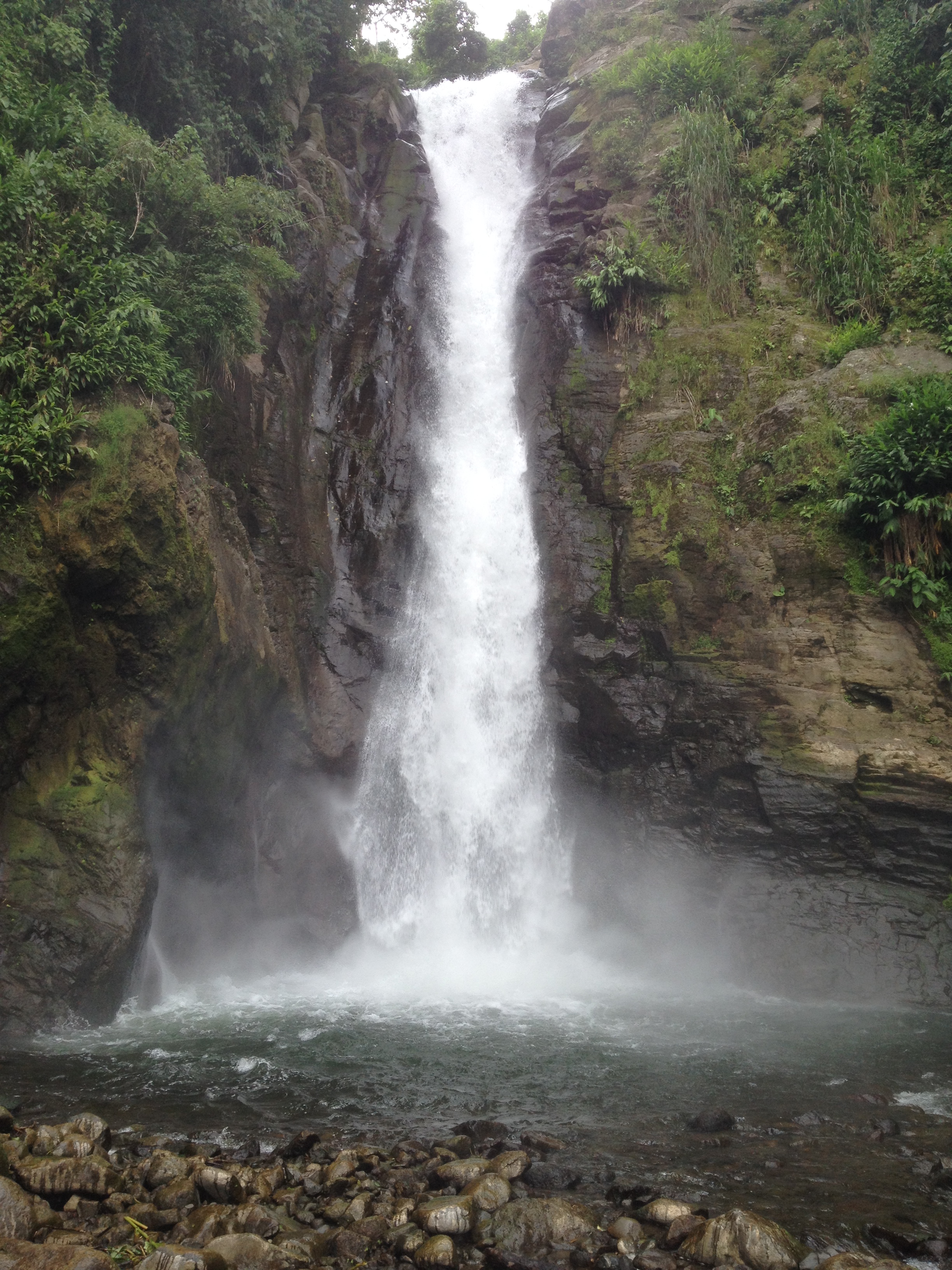
Probably close to 80 feet.
After scoping it out I started home on a new trail. The trail turned into a primitive road. The primitive road then turned into a real gravel road through a field of coffee trees.

I cruised along the road that led into a full-fledged plantation headquarters. This headquarters consisted of several row houses for the seasonal workers, some greenhouse type dealios that had some starter coffee trees going, and a roasting system with probably 100 ladies processing coffee berries.

As I hiked out of the valley that the farm was in I looked back and noticed that the workers were leaving the fields en mass. It was quitting time.

When I got back to the hostel I talked with a fellow named Nico who was staying there. Nico is a masters student who is working on a graduate degree on Environmental Policy and Sustainable development. He’s really into coffee and cacao and knows a lot about the stuff. He told me that all of these workers I saw are likely Nicaraguan migrant workers. Families split up and travel to different farms during the coffee harvest to make a buck. They come to Costa Rica because harvesting coffee is shitty work, Costa Ricans are relatively well to do, so migrants do the work. Its kind of like migrant workers in the United States doing work we don’t really want. It made me think.
I’m this gringo kid from the U.S. who is just casually strolling along one afternoon and living off the wages I made as a raft guide. I’m more healthy than most and hold a bachelor’s degree. All of this came about more or less because I was born to a middle-class family in the United States. These workers were born in Nicaragua to the families they were born to. Their education opportunities are small, their income opportunities are mostly agrarian, and they’re picking the coffee that us northerners love to drink. I have so many choices in life; what I want to do, where I want to do, who I want to associate with. Their choices are so restricted. The root of it seems to be fate. Blows my mind.
Anyway. The coffee industry is an embodiment of contemporary slavery. We should pay $10 a cup for coffee realistically. We don’t. Think about it and do some research. Sweet Dreams.

 bdawgingit